
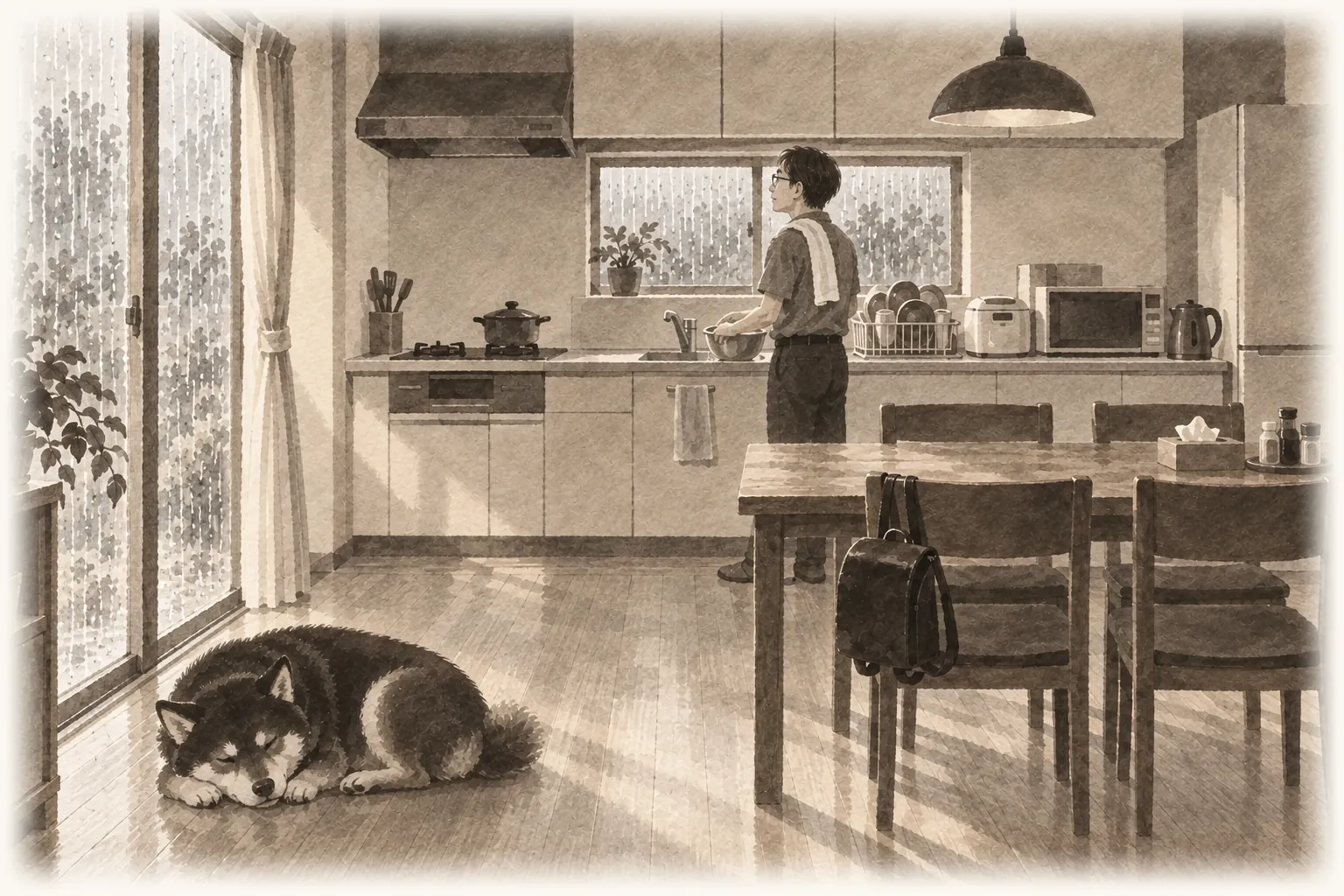
日曜日の朝。外は雨だ。
Sunday morning. Outside, it is raining.
天気がとても悪い。
The weather is very bad.
でも、日曜日は、お父さんがご飯を作る日だ。
But Sunday is the day Dad cooks the meal.
コロは、ドアの前で寝ている。
Koro is asleep by the door.
1 / 16
概要 About
In June 2025 I went to Japan from Australia and loved it. I promised myself that one day I would read Japanese.
I learned the two alphabets. Then I hit the wall: kanji, the thousands of characters that carry the meaning.
The courses I found were good, but they taught kanji, not reading. So I built the one I wanted. I am its first learner.
Begin lesson 1. Start free, no account needed.

日hi · sun, dayThe sun, squared by the chisel; the bar keeps it from being empty.
Most learners juggle three things: a kanji app, flashcards, and a book that turns out to be too hard.
Kotoba is the three in one. It knows which kanji you know, so the book is never too hard.
一one
Written in the kanji you have learned. A new one carries its kana above it. Every line plays in its character's voice.
They follow Sam, an Australian lodger, and the family he lives with.
サムSam
The lodger upstairs. He knows as much Japanese as you do.
Wants to read one whole sign without his phone.
メイMei
Seven. Counts everything out loud.
Wants a cat.
おばあちゃんGrandma
The house is hers.
Wants to hear Sam read one newspaper headline aloud by spring.
お父さんDad
Cooks on Sundays.
Wants a Sunday on the river with a rod.
お母さんMum
Drives the grocery van up the valley.
Wants one quiet hour with a book.
コロKoro
Sleeps by the door.
Wants whatever is in the bag.
Press a face.
日曜日の朝。外は雨だ。
Sunday morning. Outside, it is raining.
天気がとても悪い。
The weather is very bad.
でも、日曜日は、お父さんがご飯を作る日だ。
But Sunday is the day Dad cooks the meal.
コロは、ドアの前で寝ている。
Koro is asleep by the door.
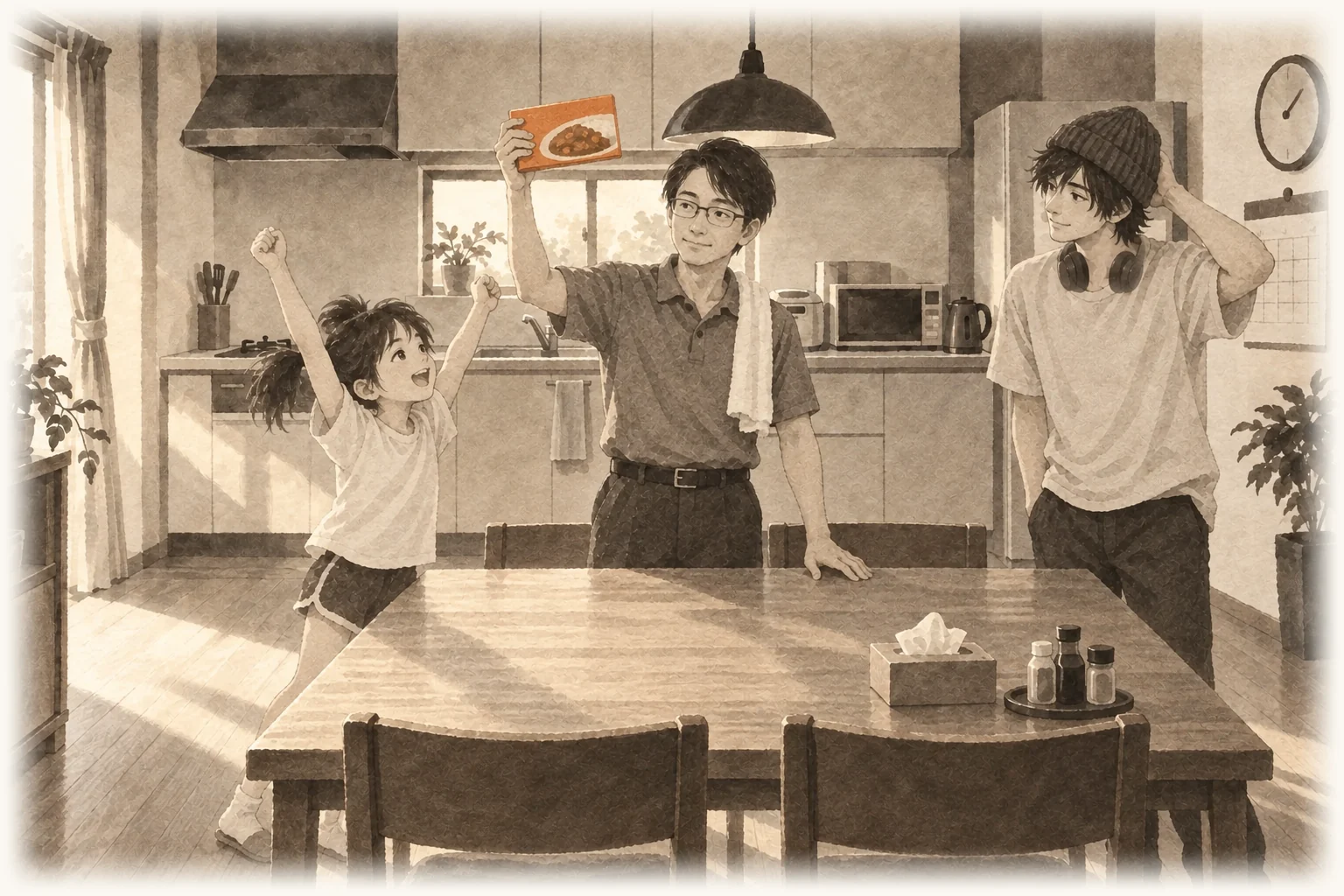
「今日はカレーだ。」
Today it is curry.
「わあ!カレー、大好き!」
Yay! I love curry!
「サムは、カレー、好き?」
Sam, do you like curry?
「好きです。でも、日本のカレーは初めてです。」
I do. But Japanese curry is a first for me.
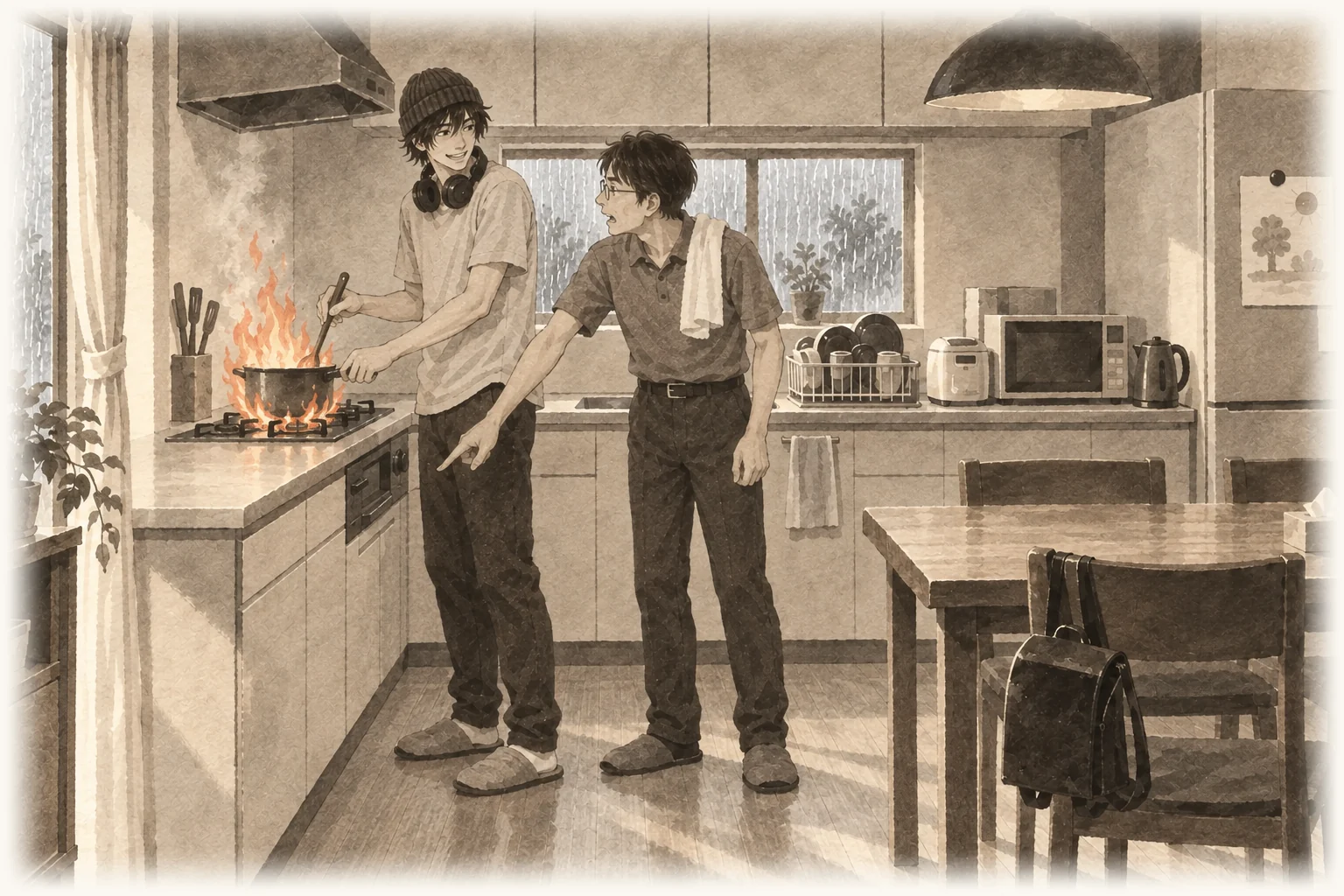
「楽しいです!」
This is fun!
でも、火が強い!
But the flame is strong!
「サム、火を少し弱くして。」
Sam, turn the flame down a little.
「はい。弱く、弱く……」
Yes. Lower, lower...
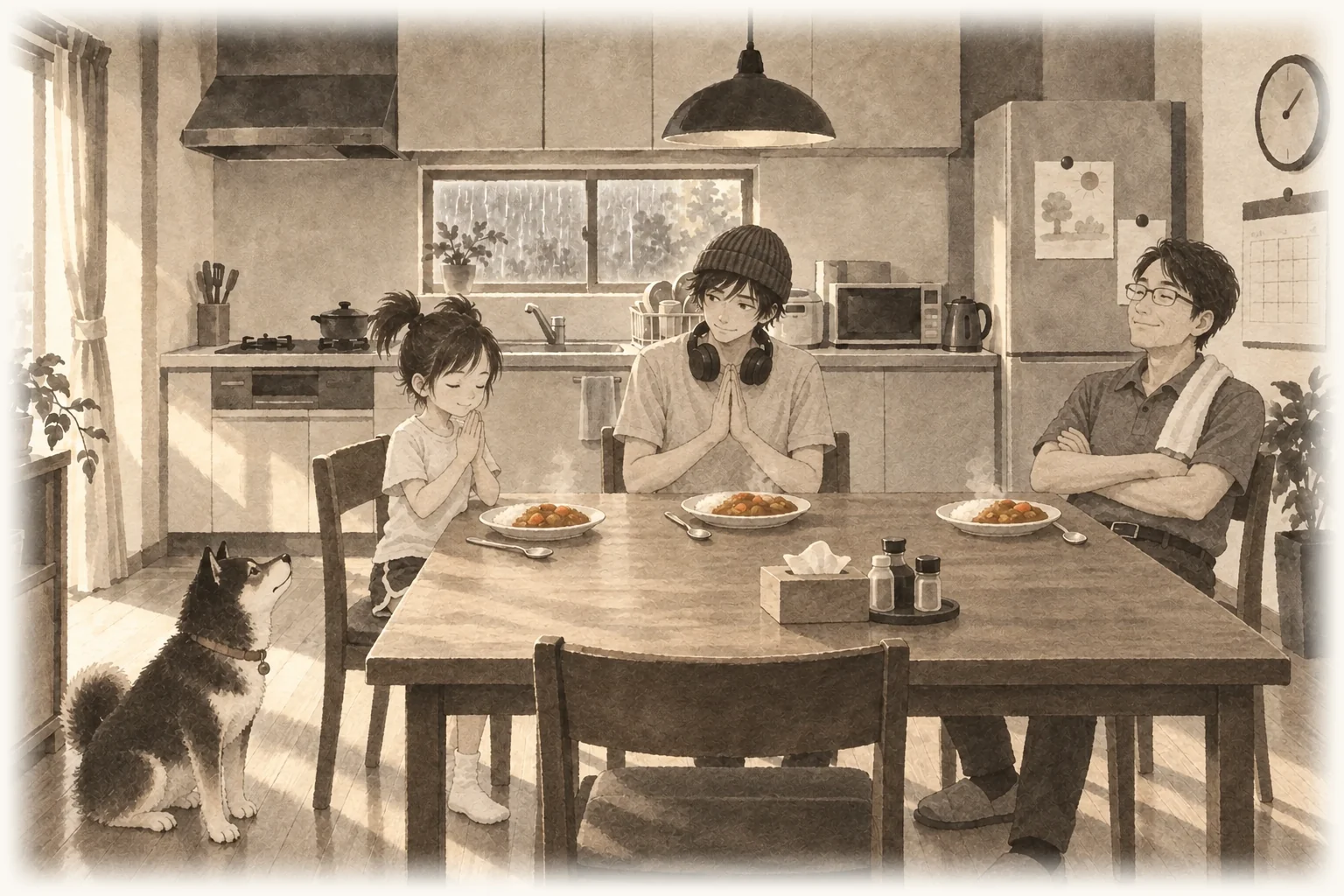
できた!テーブルに、カレーが三つ。
Done! Three curries on the table.
「いただきます!」
Let's eat!
「美味しいです!日本のカレー、好きです。」
Delicious! I like Japanese curry.
「悪くない。」
Not bad.
日曜日のカレー · Sunday Curry · lesson 29. Press a face to hear its line, a word to see its lesson.
二two
Each kanji arrives inside a real word, with a painting and the true story of its shape.
Lesson 21 · At the station
えき
駅

train station
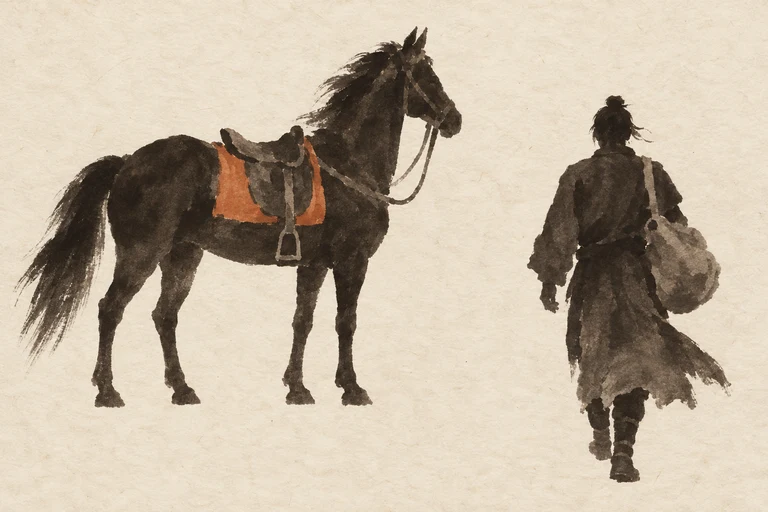
The station kept fresh horses ready long before it kept trains.
A horse stands at the left: head and mane above, the body, and the legs, now four dots. The whole named the relay post where a rider changed to a fresh horse.
When the railway came, the word moved from the post to the railway station. The horses are gone; the trains halt at 駅.
A few more.
Press a painting to see its kanji.
家ie · houseLesson 7
Under the roof, not a person but a pig.
間aida · betweenLesson 3
Moonlight in the crack of a gate shut after dark.
電電車 densha · trainLesson 21
Before it ran through wires, this was lightning in a storm.
買買う kau · to buyLesson 20
A net over a shell, and shells were money before coins.
好好き suki · likedLesson 29
Liking, drawn as a kneeling woman with a child at her side.
北kita · northLesson 26
Face the midday sun, and north is at your back.
友友達 tomodachi · friendLesson 14
Two right hands reaching the same way: help, and so a friend.
忘忘れる wasureru · to forgetLesson 22
Forgetting is a thing that has gone from the heart.
Real histories, each checked against four reference works. Where scholars disagree, the page says so.
It asks before it tells.
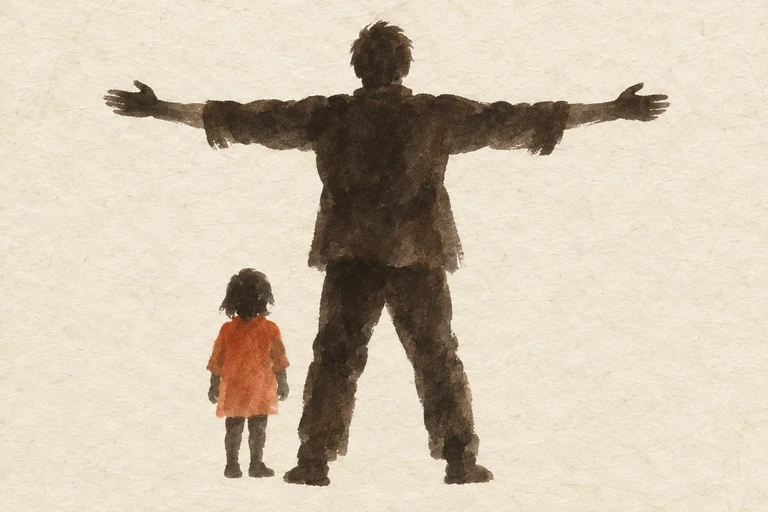
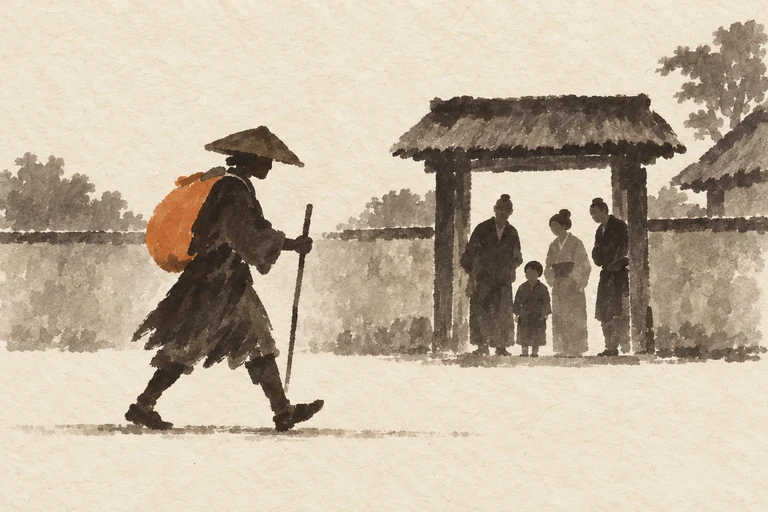
Lesson 12
大人
You know 大 from 大きい, big, and 人, person.
Together they are said as one word.
What does this word mean?

おとなadult; a grown-up
三three
Pick the right kanji. Choose how a word is said. Build a word. Order a sentence. Match opposites. Answer by ear.
Try two.
Lesson 12
Choose the kanji for the marked word.
うちの犬はしろいです。
Our dog is white.
白い is しろい: white.
白い comes back next lesson.
Lesson 7
Listen, then choose the word you heard.
犬は外にいます。
The dog is outside.
外 is そと: outside; outdoors.
外 comes back next lesson.
四four
Each word comes back on its own date: 3 lessons later, then 8, 20, 50. Miss it, and it is back next lesson.
Every word becomes a flashcard in My words.
Press a card.
五five
Each lesson closes on a verse you can now read. You keep them in My verses.
This one closes lesson 1.
You can already read its middle line. 一, 二, 三 and 四 have been numbering this page.
Waiting for the bus.
One, two, three, four.
Taxi, then.
バスを待つ
一、二、三、四
タクシーで
謝辞 Credits
材料Ingredients
作り方Method
Sort the words by how often people say them. Begin at the top.
Find the true story of each kanji. Check it against all four reference works. Say where the scholars disagree.
Write. Paint. Record.
Taste before serving: thirteen checks, every screen opened, every recording heard. One recording called the dog Kokoro. His name is Koro. It went back.
The cook
I am an amateur, so I do not decide what is taught. I bring curiosity and a love of learning: I ask the questions, and the answers come back.
Sources and licences
個人情報 Privacy
Kotoba keeps as little about you as it can.
If you do not sign in. Your progress is kept in this browser only. Nothing about you is sent to us.
If you sign in with Google. We keep your Google account's name and email address, and your study record: the lessons and words you have done. We keep them so that your progress follows you to another computer. We use them for nothing else and give them to no one. You can delete your account, and everything kept with it, from the account menu.
Counting visits. We use Google Analytics to count visits and to see which lessons are opened. It sets cookies in your browser.
Other services the page calls. The fonts come from Google Fonts and the sign-in button from Google. The site, its pictures and its sound are served by Cloudflare. As with any web page, these services see your internet address when your browser asks them for a file.
What we do not do. We show no advertising, and we do not sell or share your data.
Last updated 11 November 2026
